
Maritime Nostalgia, Summer Programs
And some notes on Newfoundland

Hi there dear readers,
Apologies for the unscheduled gap in these letters: I got busy ahead of a research trip to Newfoundland, and have been up along those subarctic northern coasts for the last two weeks in service of the book I’m writing. A couple of people cancelled their paid subscriptions during the gap, and I get it! You don’t owe me a dime, of course, and I’m honored that anyone is giving me five bucks a month for these, even temporarily.
That said, this newsletter is pretty cheap, especially considering that it comes with free nature walks, and I believe that those of you who stick around will be happy. A lot of the stuff I saw up in Newfoundland is going in the book, but I’ve also got some great material for Landlubber, which means cool stuff in store for you in the coming weeks.
I flew back on the 4th of July, touching down in LaGuardia two minutes before midnight, so I missed the parade of tall ships that sailed through New York Harbor, which made me sad. Luckily, some of those boats stuck around, and I snuck down in the rain on Monday to see the ships that were docked along the West Side of Manhattan. Before I get to boats, I’ve got some programming scheduled that I want to make sure you know about, including a cool new collaboration with the Architecture League.
That program is a series of tours based on the essays about urban ecologies that I’ve been writing for Urban Omnibus. These are for people who become Urban Omnibus “builder members” of the Architecture League, a group that does lots of cool stuff throughout New York City during the year, or for anyone who donates $50 or more dollars to the organization. The league hosts lots of cool programs and events that touch on architecture and urbanism-type stuff around the city, and gives out awards and prizes to support people working on neat stuff, so there’s more to look forward to if join. The tours are built to give people an up-close look at some of the stuff I’ve been writing for them about the ecology of urban spaces in this series here! The dates for these are as follows:
Saturday, July 18, 2:00 PM
Start: Grant’s Tomb at Riverside Park
End: Riverbank State Park
Length: 1.5 miles
A walk focused on peregrine falcons, chimney swifts, and other birds that nest along the ledges, chimneys, and in other anthropogenic structures of New York City, this tour begins in Riverside Park, and makes its way uptown towards Riverbank State Park. Along the way, we’ll stop to observe any other wildlife we encounter.
Saturday, August 16, 11:00 AM
Start: Newtown Creek Nature Walk entrance at 530 Kingsland Avenue
End: 56 Paidge Ave
Length: 1 mile
A walk along the Newtown Creek Nature Trail and around the local wastewater treatment plant in search of swallows, gulls, starlings and other animals that get by on the odd opportunities that the sewage treatment process presents to wildlife.
Urban Shorelines
Saturday September 19, 4:00 PM
Start: Pier 26
End: Pier 40
Length: 1 mile
A look at the urban ecology of the city’s watery edges, this tour begins near the Pier 26 Tide Deck, which is a recent attempt to recreate a sliver of Manhattan’s bygone tidal shoreline habitat, and makes its way uptown towards the Hudson River Park Wet Lab, where participants will get to look at some of the wildlife that currently resides amid New York City’s current shoreline environment of piers and pilings.
I’m also once again going to be leading tours with NYC Bird Alliance and Classic Harbor Line all summer.
The NYC Bird Alliance tours are along the Rockaway Beach Endangered Shorebird Nesting Area, and they’re FREE. We’ll observe nesting oystercatchers, piping plovers, terns and then, as summer continues, sandpipers and other long-distance migrants that stop over on city beaches to feast during their long journeys south from as far north as the arctic. Registration is encouraged but not required! Those meet at Beach 60th street and the Boardwalk in Rockaway and the dates and times are:
Thursday, 7/9, 5:30 PM - 7:00 PM [TONIGHT]
Thursday 7/23 5:30 PM - 7:00 PM
Saturday 8/15 10:00 AM - 11:30 AM
Saturday 8/22 10:00 AM - 11:30 AM
Saturday 9/12 10:00 AM - 11:30 AM (Link to follow soon!)
My Classic Harbor Line boat tours will take place on Sunday evenings, embarking from just north of Chelsea Piers. The boat goes down around the bottom of Manhattan, then travels up the East River to Hell Gate to visit the amazing wading bird colonies on some of the city’s abandoned islands over there. These tours include lots of history, amazing wildlife, and some of the most spectacular sunsets you can see in this wonderful city. Gabriel Willow does these too, and his tours are wonderful, so if you want to see black-crowned night herons, great egrets, snowy egrets, and more, and and learn about Nellie Bly and Typhoid Mary, but can’t make it on one of my days, you should definitely do one of his tours instead!
My dates, with links, are:
And then the general link for these boat tours, which includes both Gabriel’s tours and mine, is right here!
Maritime Ghosts
I hope some of my New York-area readers made it down to the harbor over the 4th of July to see the tall ship parade, because it looked pretty awesome. I know it was quite hot, so hopefully enough time has passed for everyone to forgive me for being in the foggy, windy northlands for that heatwave.
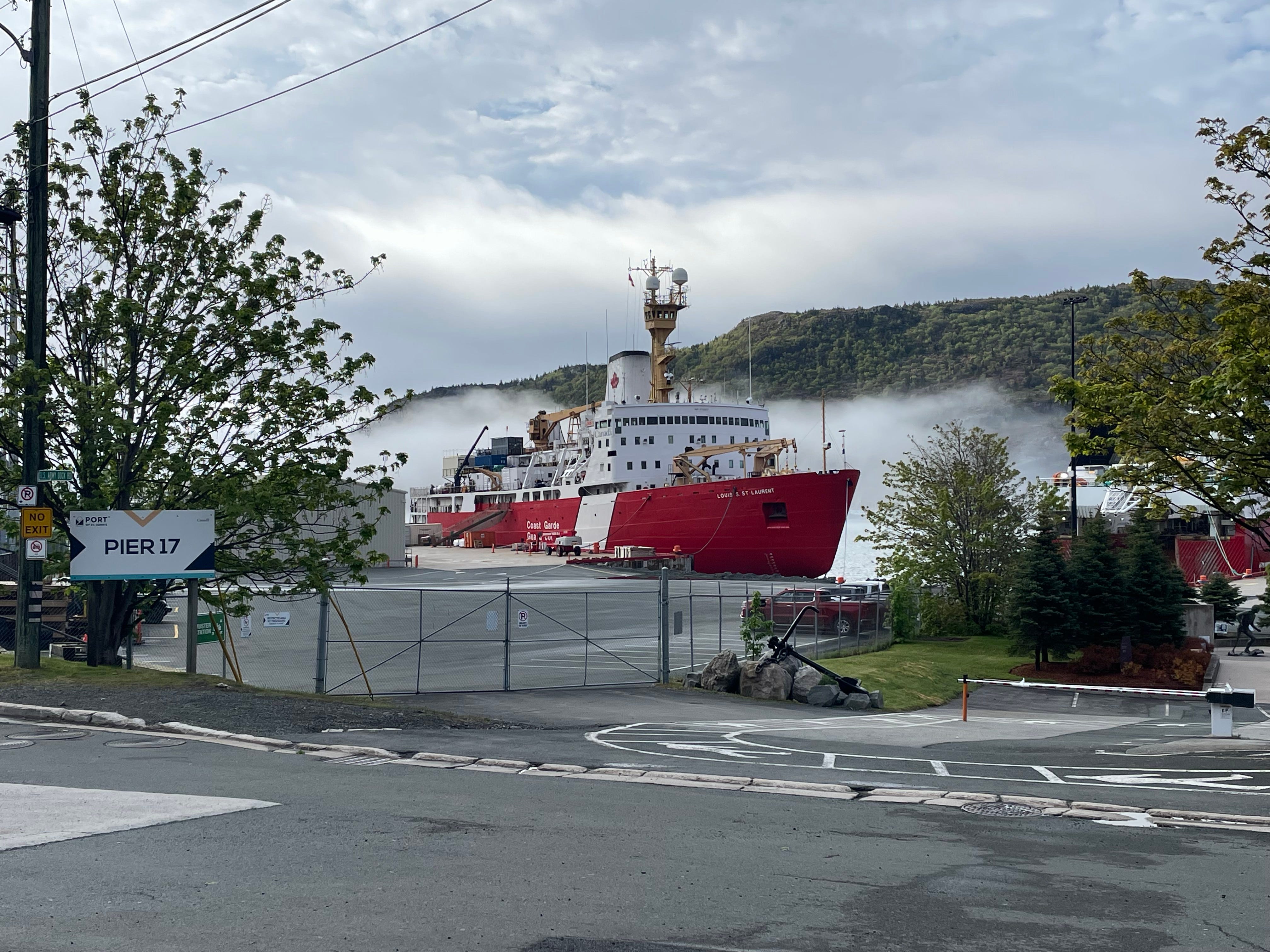
I was in the lovely city of St. John’s for a good chunk of the trip, where I got to watch the comings and goings of big boats that break ice, fish, and support work at the natural gas and oil platforms in the ocean offshore. The area’s nautical and maritime history is very much at the front of the minds of the people who live there, with all kinds of sailing and fishing stories hiding (sometimes literally) just below the surface. I had a nice day at the province’s archives reading old letters and files with a spectacular view of the harbor.
Naturally, I found myself comparing what I saw there to the boat activity I encounter out on New York City’s waterways throughout the year, and it was hard not to feel as if the maritime heyday here at home has passed me by, which is why I was all the more dejected to get back just after the boat parade. I’ve seen lots of old wooden ships in my life, mostly along the waterfronts of American cities in the northeast, where they tend to be preserved as museums. I’ve always liked them, but I also tend to leave feeling like I got just a little taste of what they had to offer. They’re usually docked, with the sails stowed, and all alone, leaving me to imagine what they must have looked like in their heyday.
Seeing, say, a square-rigger this way is a little like seeing a dinosaur skeleton in a natural history museum. It’s neat, and interesting to look at, and you can infer some stuff about how it works if you know how to look, but its essence eludes you. If the T. rex fossil leaves you wondering how the animals sounded, what their gait was like, what it would have been like to behold them in the flesh, and smell their breath, those stripped-down boats tend to leave me with lots of questions about how they handle, and what they look like under sail. The dinosaurs are gone, but for one day, they brought the old ships back! And I missed it!
It’s hard to overstate how important boats like this were to the lives of 18th and 19th century New Yorkers. Manhattan is an island that wasn’t connected to Brooklyn, Queens, or New Jersey by bridge or tunnel until 1883, so getting around in the region required boat travel of some kind until then. Getting to the United States itself from elsewhere also required, in most cases, a boat trip. For most of the city’s history, the majority of New Yorkers could trace their ancestors’ arrivals back to a long voyage in a sailing ship.
These were dark times in many ways, and it’s good to remind ourselves that the age of sail entailed a lot of suffering and injustice. People got caught in storms on trips we now think of as routine, and swept out to the ocean by currents on windless days. There were drownings, and fires, and pestilence associated with those ships. The swampy corners of the Meadowlands hid camps out of which pirates launched campaigns that terrorized civilian passengers. Lots of the ships that came in and out of the harbor carried slaves, and more still carried sugar, tobacco, and cotton that had been produced by slaves in some of the cruelest conditions in human history. I have no nostalgia for 18th or 19th century American civil society, nor do I harbor any illusions about the companies and political entities that built most of these ships, but for the ships themselves, I admit, I have a weakness.
On breezy days not so long ago, a skyline of canvas flashed on New York Harbor, a city within the city. It was composed of ships that traded places, appeared and disappeared on the horizon, eclipsed one another in turns, losing their wind and finding it again. I think about it a lot. Whenever I’m in Battery Park or DUMBO on a nice summer day, I try to imagine how awesome it must’ve been to watch all that timber and canvas moving back and forth on the harbor, and how exhilarating to see the ships from all over the world hunker down and reduce sail in a gale. Long have I yearned to see such sights!
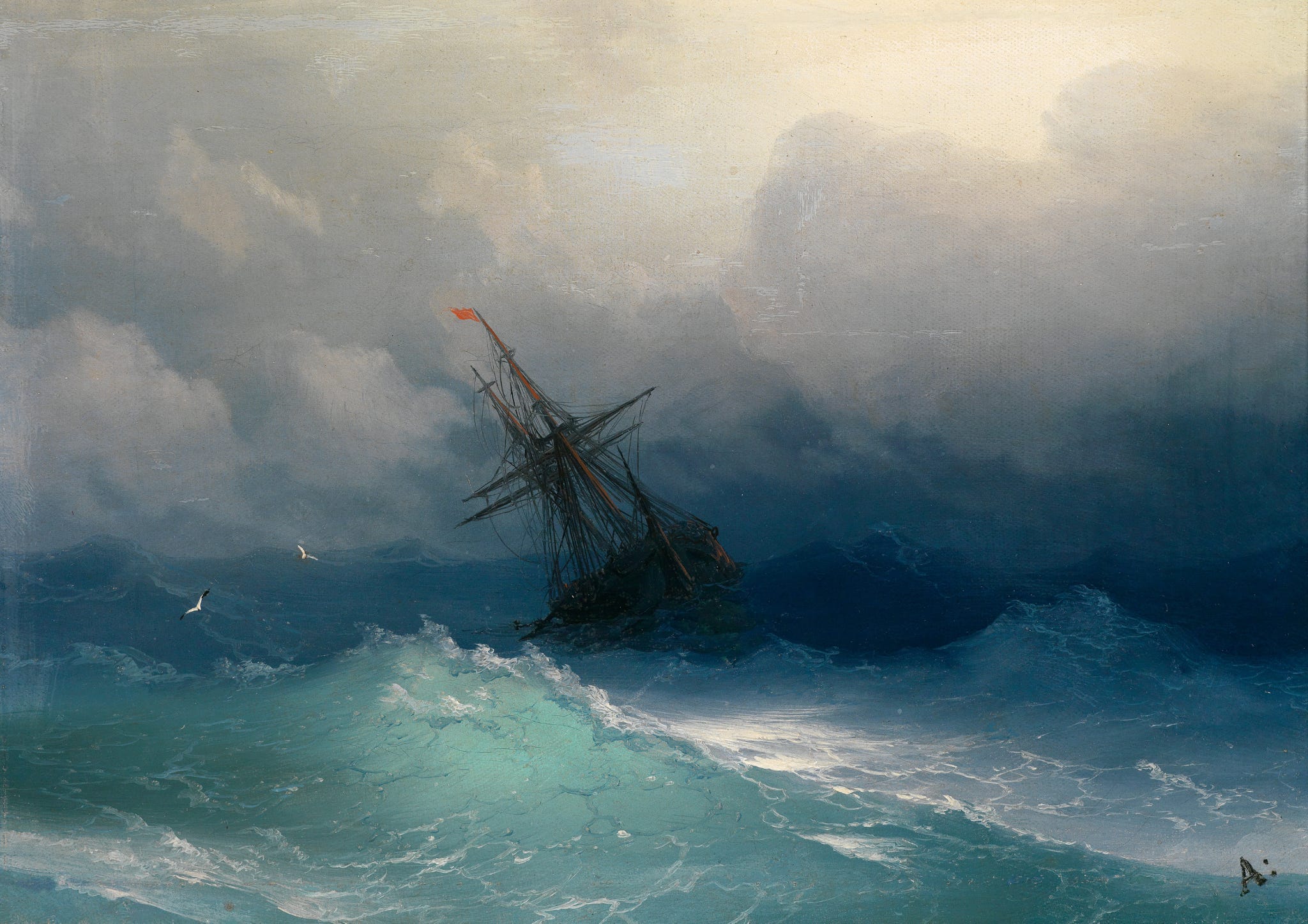
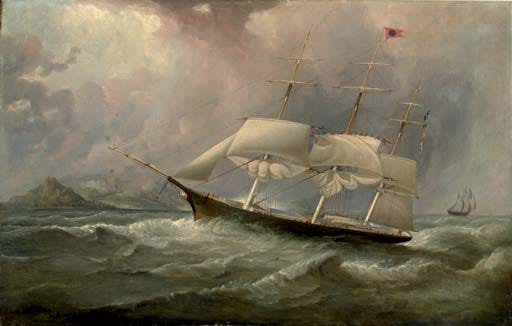
The videos of the parade look pretty spectacular, but my favorite images came from Raritan Bay, where many of the boats anchored the evening before the event to wait out a storm. The footage of those boats heeling on their anchor chains is almost hallucinatory, as if someone had brought to life the 19th Century maritime paintings of artists like Ivan Aivazovsky and James Edward Butterworth.
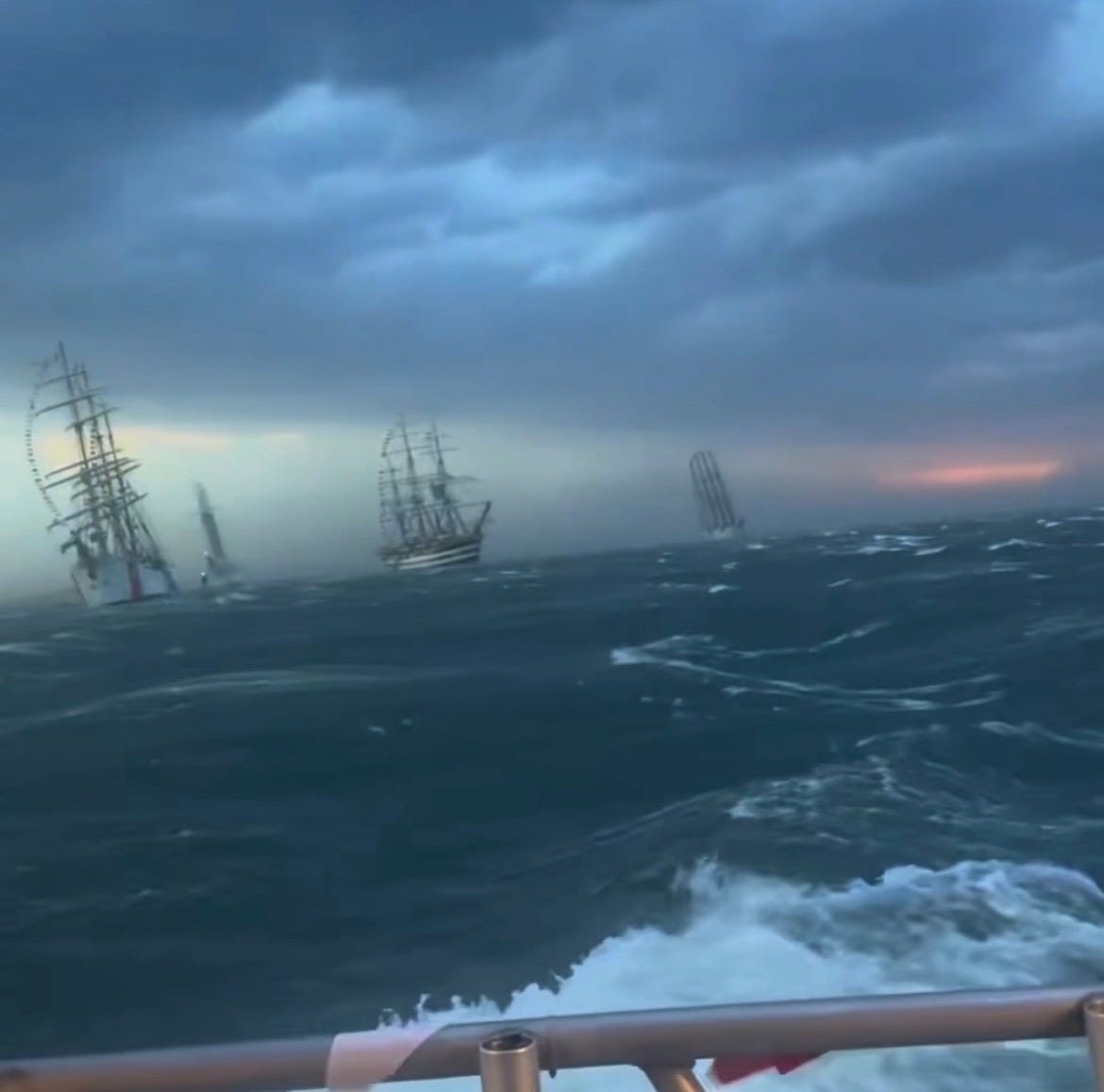
It’s worth taking a moment to watch the videos1:
Anyway, I was feeling left out of the fun, so I met up with a friend and we travelled down to the docks where many of the ships were being kept after the event. We didn’t have the passes that other people were wearing (these were free, but they sold out immediately), so we had to convince a man in a military uniform that we were supposed to be there for some kind of event that we had made up. Eventually he let us in, either because he believed our story or he was tired of listening to us tell it, and we got to walk onto some tall ships that were docked on the north end of Hudson River Park.
The ships were in the cruise terminal just south of Riverside Park, which is shielded from street view by a large parking structure, and the effect of stepping inside was pretty amazing. A forest of spars, booms, masts, sprits, and gaffs appeared overhead, with rigging hanging everywhere like vines. It felt like stepping back in time to the 19th Century waterfront, when virtually every patch of city shoreline would have been parked in with sailing ships like this.


The boats themselves were also amazing. Even if I didn’t get to see them under sail, it was neat that they were rigged up for use, and full of sailors who were happy to answer my questions about the systems and the equipment. Each crew had their own way stowing things, tidying lines, furling sails, and so on.


Many of these ships are run by crews of hundreds, with fifty or so sailors resting at any given time so that the shifts can rotate in and out to stay fresh. I asked one of the Spanish sailors aboard the Juan Sebastian de Elacanto how the crew communicated to do things like raise or trim sails, which require many people to coordinate their actions, and he explained that a decent amount of the communication involved small whistles (the ones that make the “toot toot” sound in the “Popeye the Sailor Man” theme). Who knew? Not I!


Anyway, sorry again for the little pause. More soon!
Russell
I tried to track down the people who captured these videos, but so many engagement-farm-y social media accounts had already stolen them and reshared them that I found myself unable to trace them to the source. If you took either of these videos, or know who did, please get in touch! I would love to give you credit/link you here!